A personal training business, rebuilt as a platform. Live in both app stores in ten weeks.
A decade of fitness knowledge was sitting in spreadsheets and Word docs. It now runs as a website that sells, a back office that handles the business, and an app that clients use every day.
Learn more
Rafique “Flex” Cabral is a certified fitness coach with a growing client roster. He did not need an app. He needed the whole business, marketing, onboarding, payments, program delivery, and day-to-day coaching, to run without him being the bottleneck. The project began with another developer, who built a strong foundation but no longer had the capacity to carry it forward, and recommended ADS to take it the rest of the way. We picked up the codebase at the three-week mark, shipped all three pieces to the App Store and Google Play, and stayed on as his technical team.
One engagement. Here is what we delivered.
Commits and counting
Every one tied to work he could read.
Learn more
512 commits in the project’s first four months, of which 312 landed before the app went live. The first three weeks are the original developer’s foundation; everything after the handoff is ours. Alongside more than 470 tracked work items on a shared project board, so Flex could see what was in progress, what shipped, and what was queued without having to ask for a status update.
Weeks to live in both stores
First commit to Apple and Google approval.
Learn more
We took over the codebase three weeks after the first commit and submitted both apps three weeks later, at the six-week mark. Both were live in the App Store and Google Play 68 days in. We handled listings, builds, submissions, and the review process end to end, so Flex never had to learn either company’s requirements himself.
Products in production
A marketing site, a business platform, and a native app.
Learn more
All three share one codebase and one database, so a change Flex makes in the admin portal shows up on his clients’ phones without anyone copying anything by hand.
The work, the way his clients see it.
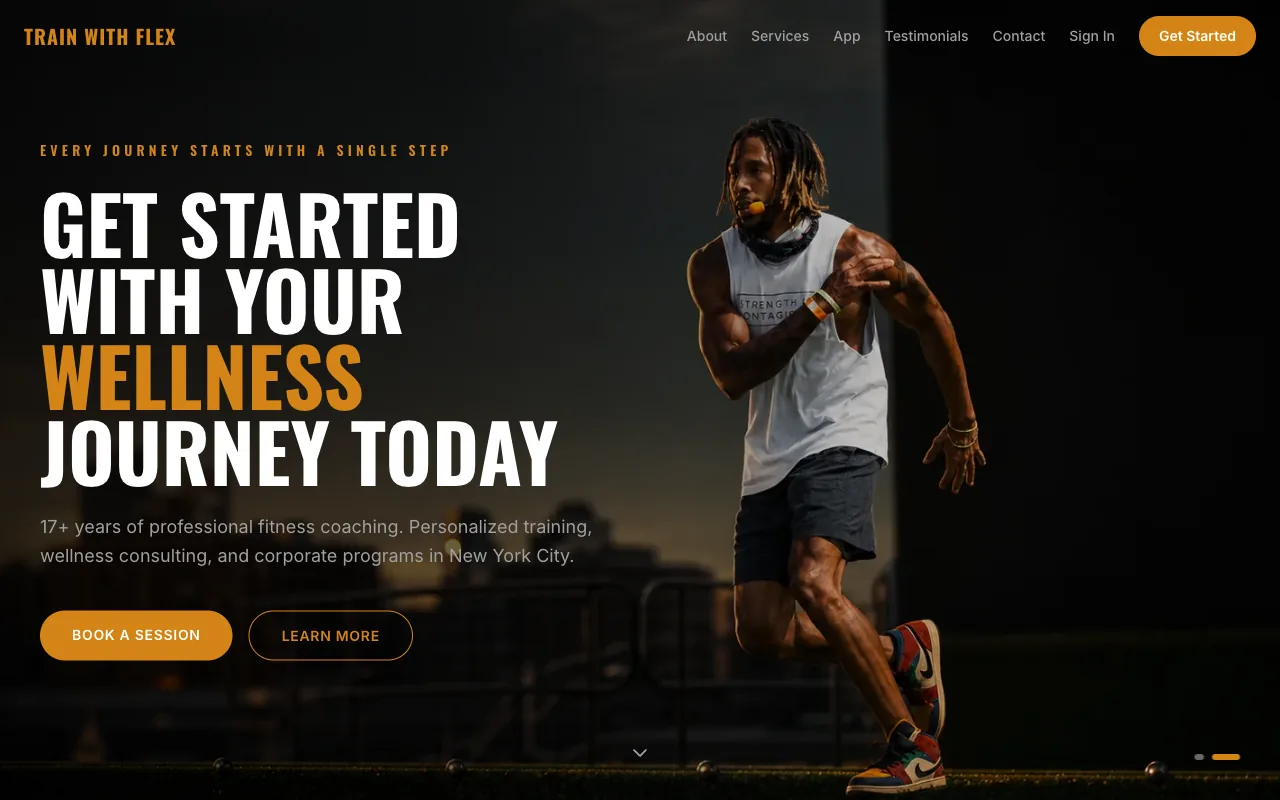
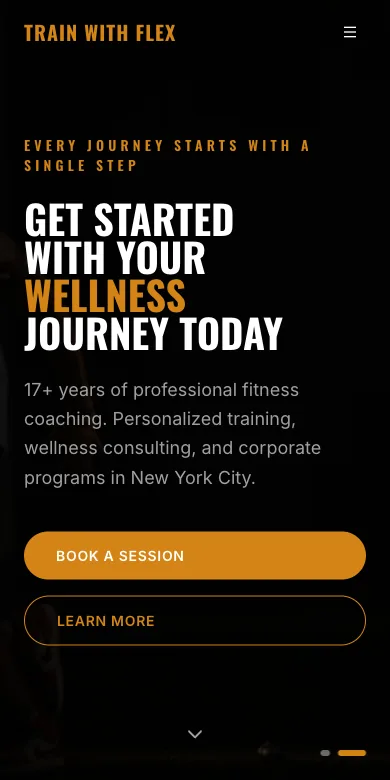
The marketing site is public and the app is in both stores, so you can look at the real thing.
Idea to the App Store, without the usual stall.
First commit to live in both stores.
The original developer laid the foundation in the first three weeks. We took over from there, submitted both apps at week six, and they went live in the App Store and Google Play 68 days from the first commit.
Sixty-eight days, drawn one commit at a time.
This is the launch, unedited: every commit from the first one to the day the app went live in both stores, including the original developer’s foundation and the week-three handoff to ADS. Each dot is one commit, placed by date and time of day, colored by the part of the platform it touched.
Web app · 156 commits
Marketing site, signup, and the admin portal. The heaviest lane in the early weeks: the business ran on the web before the app existed.
Mobile app · 119 commits
The iOS and Android app clients use every day. Built in parallel and ramped through the middle weeks straight into store submission.
Platform & backend · 37 commits
Database, payments, backups, and tooling. The connective tissue, steady the whole way through.
Source: the project’s git history, the 68 days from first commit to launch. Horizontal space follows activity rather than the calendar, the order and the days are exact. Web is the marketing site, signup, and admin portal; Mobile is the iOS and Android app; Platform is database, payments, and tooling.
One engagement. Three connected products.
Each one does a different job, and each one knows what the other two know.
A website that brings clients in
Services, events, testimonials, and certifications in his own brand.
Learn more
Built in Flex’s black-and-gold brand and deployed on a global network so it loads fast anywhere. Contact and bug-report forms go straight to his phone as push notifications, so no lead sits unread in an inbox overnight.
A platform that runs the business
Signup, waivers, approvals, program building, and getting paid.
Learn more
Clients sign up and complete digital waivers and assessments. Flex reviews them in an admin portal, approves the client, and builds their program in a drag-and-drop builder that mirrors how he already works: phases, workout days, circuits, and per-client overrides. Square handles checkout and subscriptions, so payment collection is automatic.
An app clients actually open
Live in the App Store and Google Play as Dopamine HIIT.
Learn more
Clients get their weekly program, a guided circuit-by-circuit workout runner, meal guidance, goal tracking, habit streaks, scheduling, and community challenges with badges. When Flex updates a program on the web, it is on his clients’ phones immediately.
I asked for a website and got my whole business.
“I asked for a website and got my whole business: site, signups, payments, and my own app in both app stores. I explain what I want in plain English and it shows up, sometimes the same day. They handled all the Apple and Google stuff I never could have done alone. If you run a business, just tell ADS what you want and let them build it.”
The parts you never see are the ones holding it up.
A platform is only as good as what sits underneath it. Here is what we built there, and why it matters.
One place the truth lives
Clients, programs, workouts, and payments in a single system.
Learn more
We designed the data model around how coaching actually works, so we store a program as phases, weeks, workout days, and circuits rather than as a document someone has to read and retype. Every screen across web and mobile reads from that one source, which is why nothing goes stale and no two places disagree about what a client is supposed to do this week.
Systems that talk to each other
Payments, sign-in, and notifications wired together.
Learn more
Connecting to an outside service means using its API, the doorway one system opens for another. We wired in Square so checkout and recurring subscriptions run without Flex chasing anyone, authentication so clients sign in securely, and push notifications so new leads and client activity reach his phone. We built each one so a hiccup on their end does not take his business down.
Locked down where it counts
Client health data deserves better than an afterthought.
Learn more
Admin access requires two-factor authentication, so a stolen password is not enough to get in. We ran a security review against the OWASP standard, the industry checklist for common web vulnerabilities, kept credentials encrypted rather than sitting in the code, and put audit trails on destructive actions so there is always a record of who changed what. When an outside sign-in provider had an outage, we diagnosed it and restored login the same day.
From a morning call to his clients’ phones by evening.
Said in plain language
He describes what he wants. No spec required.
Learn more
Flex is a coach, not a product manager. He tells us what he needs his business to do, and translating that into architecture, screens, and data is our job.
Built and tracked
We logged every request where he could see it.
Learn more
Work went onto a shared board he could read at any time, over 470 items across four months. No black box, and no wondering whether something was forgotten.
Requests from a morning call were routinely live the same evening, including one batch of eight features shipped the day it was requested.
Shipped to the stores
We handled the app stores, start to finish.
Learn more
We handled store listings, builds, submissions, and the review process end to end, so Flex could stay focused on his clients instead of learning two publishing systems.
Supported after launch
Still his technical team, with billing he can audit.
Learn more
Launch is the start of the relationship. We stayed on for maintenance and new features under a plan with transparent, logged hours, and the infrastructure sits in accounts Flex owns outright.
Most agencies just hand you what you ask for.
We got to know how Flex runs his business and what his clients actually need, then built for that: a business system with web, mobile, payments, and operations that talk to each other instead of four tools he has to reconcile himself. One team to call, one board that shows the work, and one bill he can read.
What that buys him is room to grow. Anonymous corporate wellness surveys let him pitch employers instead of only individuals. Cohort engagement reports show which client groups are thriving. An AI-assisted program assignment pipeline is staged for his next phase of scale.
Modern tools, chosen to be maintained.
One shared codebase behind all three products, so the web app, admin portal, and mobile app never drift apart.
Have a business that’s ready to expand?
From a first version to a platform that runs a whole business, ADS designs, builds, and runs custom software that does exactly what the work requires.